What is an obedience?
A Masonic obedience is a grouping of Masonic lodges. Most often in a federative form, it may take the name of Grand Lodge (the most common term, originating in England), or Grand Orient (a term originating in France, less widespread around the world), or, more rarely, other designations. This form of grouping appeared at the beginning of the 18th century in England and marks the beginning of speculative Freemasonry. The obedience to which our lodge belongs is the Grande Loge Traditionnelle et Symbolique Opéra (G.L.T.S.O.).
What is a lodge?
A Masonic lodge is a civil brotherhood that brings together a small group of members of Freemasonry at the local level.
In Masonic terminology, the basic groups of Freemasons are called lodges or workshops. Lodges are characterised by a “distinctive title”, often an order number, and an “Orient” — that is, the town or place to which it chooses to attach itself. Only lodges hold the power, essential in Freemasonry, to initiate new members. They meet in Masonic temples.
What is a Masonic temple?
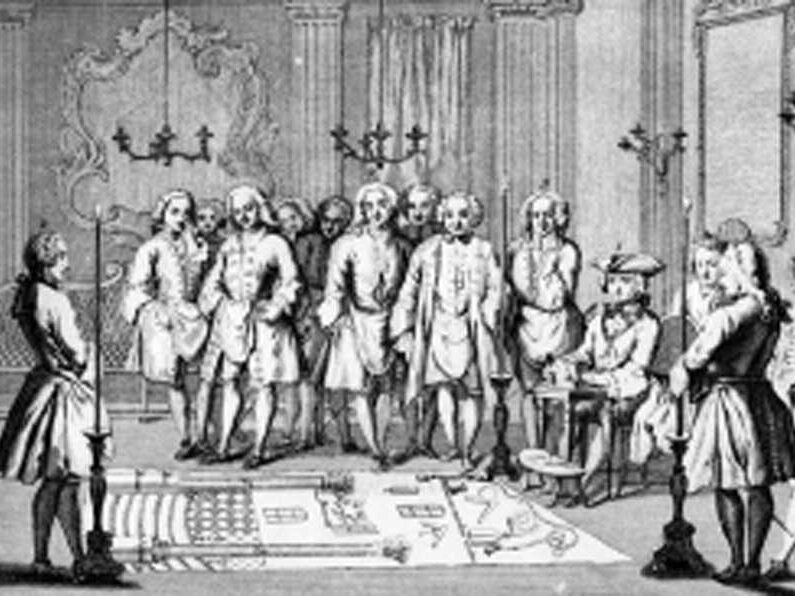
A Masonic temple is the symbolic name given to the place where Masonic lodges meet to practise their rituals, in the course of gatherings they call “Meetings” (Tenues). Its layout and decoration follow precise symbolic rules which may, however, differ considerably according to the era, country, rite and Masonic degree.
By extension, the entire building is also often referred to as a “Masonic temple”.
What is a rite?
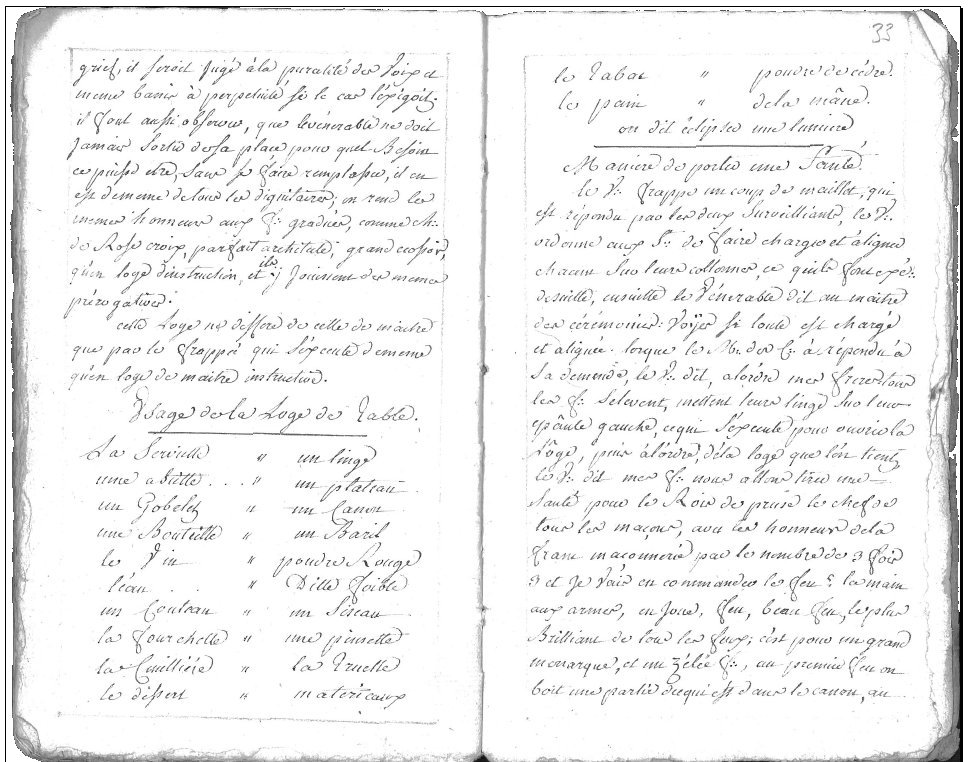
Appearing with the speculative lodges, “rites“, from the Latin Ritus, were established in order to standardise and harmonise practices in the Masonic lodge. They therefore define the whole body of customs and the order in which these must be carried out during the various meetings and ceremonies. Inspired by ancient or operative traditions and by the Bible, the rites prescribe gestures, language, movements and attitudes. However, despite a similar ideal, Freemasons carry out their work in a plurality of ways — and this from the middle of the 18th century onwards, notably with the quarrel of the Ancients and the Moderns within English Freemasonry. Since then, each century has seen different rites emerge. A lodge, or “workshop”, generally practises one and the same rite, whereas a Masonic obedience may observe several.
Rites are made up of symbols, words, gestures and signs. While it appears impossible to list all the rites ever practised, authors and historians commonly accept the existence of around fifty relatively distinct rites. Reunion Fraternelle et Tradition works in the Traditional French Rite.
What is speculative Freemasonry?
From the 18th century onwards, Freemasonry is described as “speculative” — in the sense of “theoretical and abstract” — because it uses symbols of the mason’s trade to nourish the reflection of its members, but does not require them to actually practise that profession. By contrast, “operative” is a more recent term coined a contrario to designate both all Freemasonry before 1717 (the date of the official birth of speculative Freemasonry) and that made up exclusively of tradesmen. In the 18th century, French Freemasons used the term “practical masonry” (maçonnerie de pratique) for the latter.
What is a Meeting (Tenue)?
A Meeting (Tenue) is a ritual gathering of a lodge or workshop in a temple, presided over by the Worshipful Master in the East.
How long does a Meeting last?
The length of a Meeting varies according to its content. On average, one can say that it lasts about 2 hours.
What happens during a Meeting?
A Meeting is mainly made up of a ritual opening, symbolic work, and a ritual closing.
It is followed by fraternal agapes.
What are agapes?
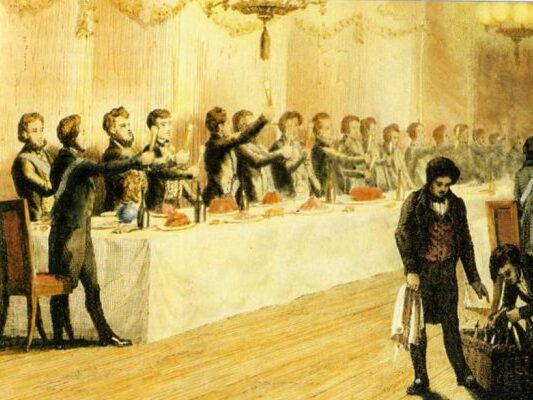
This word is most often used in the plural. It refers to the sharing of a meal in the “wet room” (salle humide), among masons. This time of sharing at the end of the Meeting is the continuation of the work that has just been carried out. It is a convivial moment where speech is free, and which allows the brethren to get to know one another better. It can take the form of a ritual banquet.
What is the “wet room”?
It is a place not open to the profane, save in exceptional cases, and where the agapes take place. It is not, strictly speaking, part of the Masonic temple. It may be adjoined to it or located in an annexe building.
How many times a month do Freemasons meet?
In general, Lodges meet 1 to 2 times a month at regular intervals. Sometimes they organise additional meetings outside the Temple.


How much time should be devoted to Freemasonry?
The question of how much time to devote to Freemasonry is up to you. The most important thing is probably regular attendance at Meetings. To this must also be added an extra evening roughly every two months for the instruction of apprentices, as well as the time needed (quite variable) to write one or two symbolic works (papers) per year.

Does Freemasonry have a cost?
Yes, all members of the Lodge pay a subscription to the Obedience to cover running costs and the rental of the Temple. In addition, the agapes are paid for (about £18 per meal). At the G.L.T.S.O., the monthly cost is around £28 per month, which brings the overall cost to about £46 per month, agapes included.
How do you leave Freemasonry?
If one day you decide to leave Freemasonry, all you need to do is send a letter of resignation (by post or by email) to your Worshipful Master, who will inform the Obedience: that’s all!


How do you become a Freemason?
If you wish to become a Freemason, you can fill in the form provided on this site to apply online. After examining your motivations, and if your application appears serious to us, two Brethren will get in touch with you in order to meet you. During these meetings, you will be able to ask any questions you wish. If your application is confirmed and your wish to join us is still as strong, you will then need to provide us with a clean criminal record extract and a letter of motivation.